
First-time buyers of cars and sport utility vehicles (SUVs) have made a comeback, shows last year's data from top passenger vehicle (PV) makers. If the trend persists, it may move the needle on the overall car penetration ratio. India's car penetration ratio is 32 per 1,000 people - one of the lowest, compared to mature car markets like the US and Europe.

Is it only about choosing the right model and manufacturer? No, there's more to it. Know how to select the ideal car.

The Tata group flagship has sold more sport utility vehicles (SUVs) in the domestic PV market in the past four months than any other automotive manufacturer, cementing its no.1 spot. It first grabbed pole position in the SUV segment in October 2021 after the launch of the Punch - a sub-compact SUV offering.

Ghosn's partnership with motorcycle and auto-rickshaw maker Bajaj Auto got most publicity.

The offers mostly include free insurance, exchange bonus, and free accessories

New participants included Chinese players such as Great Wall Motors and Haima Automobile along with Olectra.

The Nano will get some upgrades on this year's model year.

According to industry data, for two months, sale of the Zest (7,359 units) were higher than that of Amaze (6,792 units).

While two-wheeler sales declined 22 per cent, two other segments, bigger in value while being lower in volume, were much less impacted.

The economy segment of India's car market is unlikely to revive soon term as inflation and prices prompt buyers to defer purchases. The share of entry-level cars in the passenger vehicle market dropped to the lowest in seven years at the end of the Financial Year 2021-22 (FY22). A recovery in the segment will be largely driven by the overall economic growth, improvement in income levels, and easing of semiconductor shortage, say carmakers and analysts.

What will it take for Tesla to plug and play in India? Sector pundits say it's a mix of strategy, getting the price right, timing, the right talent, and above all, patience.

The 800cc five-speed manual transmission comes with a fuel economy of 25.17 kmpl

While the Slavia comes in eight different variants, it's the base model that starts at around Rs 10.7 lakh that is most likely to take a bite out of the market share of its competitors, says Pavan Lall.

Japanese car major Nissan on Tuesday said will hike the prices of its vehicles, including hatchback Micra and sports utility vehicle Terrano in India, by up to 4 per cent from next month in order to offset the impact of rupee depreciation and escalating input costs.

Tech Mahindra was the top loser in the Sensex pack, crashing over 9 per cent, followed by Kotak Bank, Axis Bank, TCS, Infosys and HUL. On the other hand, Hero MotoCorp, Bajaj Auto, Bajaj Finance and Titan were the gainers.

With cars like the Toyota Corolla and the Honda Civic selling in very small numbers and potentially even being phased out, the Octavia has very little competition, says Pavan Lall.

The price increase is marginal and the company is confident that the customers will appreciate its efforts to offer globally renowned products at affordable prices.

A record number of 85 products will be launched.

What worked for Hyundai in India when so many other auto manufacturers have had to eat humble pie? Pavan Lall finds out.

FMCG, automobile industries say if GST regime kicks in, rail hubs can take Make in India to a new high.

Car makers are either tweaking their existing engines or developing new powertrains to attain maximum mileage numbers and attract more buyers.

Owing to the poor market conditions and tepid sentiments, the size of the show has shrunk compared to the last edition, which took place in 2018. A majority of the two-wheeler makers, and several car and commercial vehicle makers, have opted out of this year's show, which opens for the media on Wednesday.

Toyota has capacity to manufacture 310,000 vehicles at its two plants located near Bengaluru

Records of millions of car owners are mined to generate leads, pitch sales and get feedback to develop vehicles, says Ajay Modi.

Let alone a discount, they might not even get the model, variant or colour of choice in BS-IV-compliant vehicles.

Normal monsoon makes FMCG, automobile and consumer durable companies optimistic about growth prospects

Passenger vehicle wholesales in India rose by 14.16 per cent in August to 2,15,916 units, driven by pent-up demand, industry body SIAM said on Friday. According to the latest data by the Society of Indian Automobile Manufacturers, passenger vehicle wholesales stood at 1,89,129 units in the same month last year.

Good pay hikes, positive macroeconomic factors and the taming of inflation have had a positive effect on purchases

Car deliveries during the nine-day period saw sharp year-on-year (double-digit increase for most automobile companies.

Cumulative sale at India's top six passenger vehicle (PV) makers dropped 0.7 per cent to 267,000 units, from 269,000 a year before.

The new Scorpio came after a gap of 24 months since its last launch, during which the competition launched a slew of products.

Today, automatic cars are reliable, fuel-efficient and easy to maintain

Poor contract workers often have little or no access to safety equipment or health benefits in factories.

About two dozen car & SUV models and two-wheelers lined up for launch
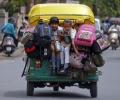
This comes at a time when Ola is looking to replicate nationally the success of its auto-rickshaw offering in Chennai and Bengaluru.
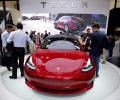
Palo Alto-based electric carmaker Tesla has initiated talks with the government on the modalities of setting up fully-owned retail outlets. The company needs to comply with the foreign direct investment (FDI) guidelines related to single-brand retail, including local sourcing norms, to sell directly in India. At least two other foreign majors - Apple and Ikea - were engaged in talks with the government long before the sourcing norms were eased under the single-brand retail route.

RBI's fifth bi-monthly monetary policy meet due tomorrow also kept the investors on their toes.

Index heavyweights were the top losers along with bank shares.

This year, both rural and urban markets have reported around 18 per cent fall in the first quarter. However, most auto majors expect that by January, there would be a pick up.

Companies also said confidence was yet to return among buyers, with many holding back their decision to buy cars.
 © 2026 Rediff.com - Advertise with us - Disclaimer - Privacy Policy - Sitemap - Feedback - About us - Terms of use - Grievances